Research Zeppelin Measures Fine Particles in the Arctic
Original article on 28/05/2026 on https://www.unibw.de/home/news/2026/forschungszeppelin-der-unibw-m-in-der-arktis
Translated with Microsoft Copilot, checked and verified by a human.
100 years ago, the legendary airship expedition Norge set off from Ny-Ålesund in Svalbard toward the North Pole. A month ago, another zeppelin is taking to the skies there – this time in the service of aerosol science. As part of the LUKAS research project at the University of the Bundeswehr Munich, a team led by Prof. Adam is investigating the concentration of aerosols in the Arctic atmosphere and their influence on the climate.
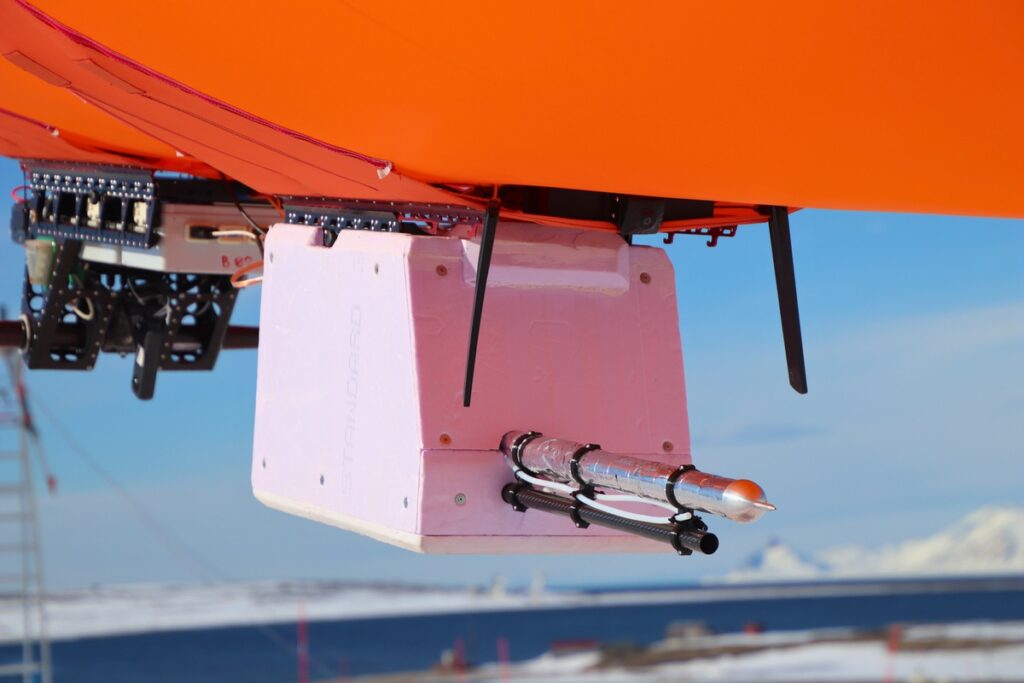
The research zeppelin, roughly twelve meters long, is equipped with highly sensitive measurement technology and is operated in cooperation with Charles University in Prague. Its operational area extends from the Ny-Ålesund research station into the surrounding mountain regions.
Why aerosols influence the climate
Aerosols — tiny solid or liquid particles suspended in the air — affect the climate in many ways. They originate from natural processes as well as human activities such as traffic, shipping, or industry. Even in the remote Arctic, such particles can be detected because air currents transport them thousands of kilometers from Europe, North America, or Asia.
These substances can accumulate in the atmosphere, especially during the long polar night. The resulting phenomenon, known as Arctic Haze, is considered an important subject of climate research. “Understanding these processes is crucial for understanding climate change,” explains project leader Prof. Adam. The Arctic is warming significantly faster than other regions of the Earth. Aerosols can have both warming and cooling effects and also influence the formation and lifespan of clouds.
Measurement flights under extreme conditions
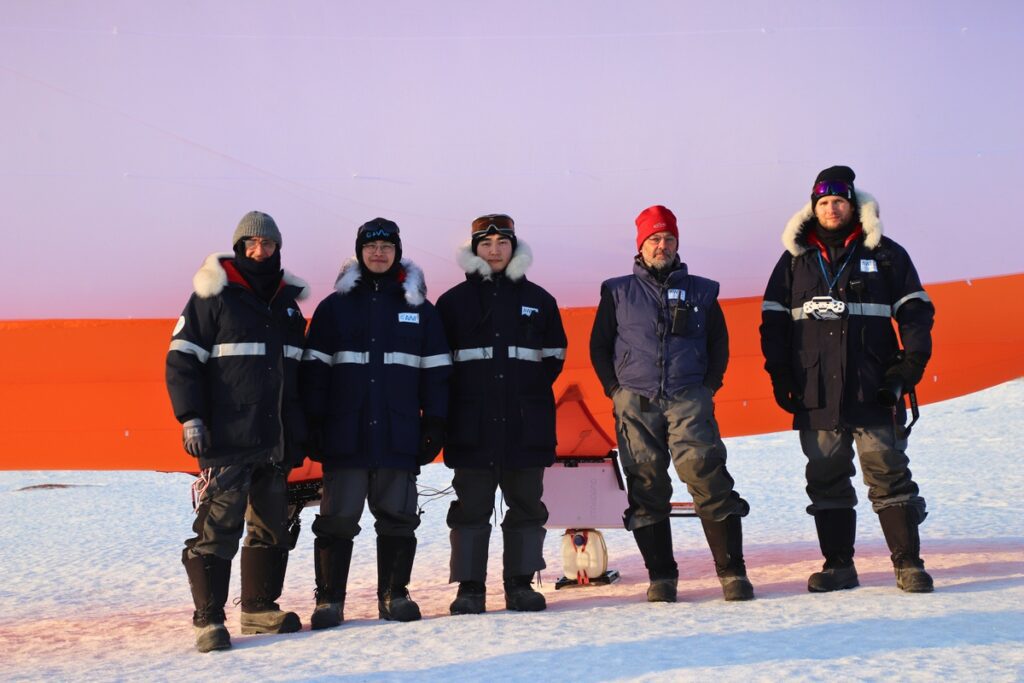
During a four‑week research mission, the LUKAS team used the zeppelin to create a three‑dimensional profile of aerosol concentrations in the region. The airship is remotely controlled from the ground and follows predefined routes at various altitudes. The flight measurements are supplemented by a stationary measurement system that has been automatically analyzing individual fine‑particle samples since the beginning of winter and transmitting the data directly to Neubiberg.
Conditions on site posed particular challenges for the researchers. Strong gusts, shifting wind directions, and icing made flight operations difficult. Thanks to a multi‑stage safety concept and the support of experienced pilots, all measurements were successfully completed. The researchers are now returning to Neubiberg with extensive datasets.
During their stay, the LUKAS team received support from the German‑French AWIPEV research collaboration, other scientific institutions, and the local operations staff. The expedition was funded by dtec.bw – the Bundeswehr Centre for Digitalization and Technology Research. dtec.bw is financed by the European Union as part of NextGenerationEU.
Did you find what you were looking for?