Mild Weather Puts Important Field Research on Hold
Original article by Elin Vinje Jenssen / Norwegian Polar Institute, 22 April 2026: https://npolar.no/nyhet/mildvaer-setter-viktig-feltforskning-pa-vent-i-ny-alesund/
Translated with Microsoft Copilot, checked and further adapted by Fieke Rader / Norwegian Polar Institute, 24th of April, 2026.
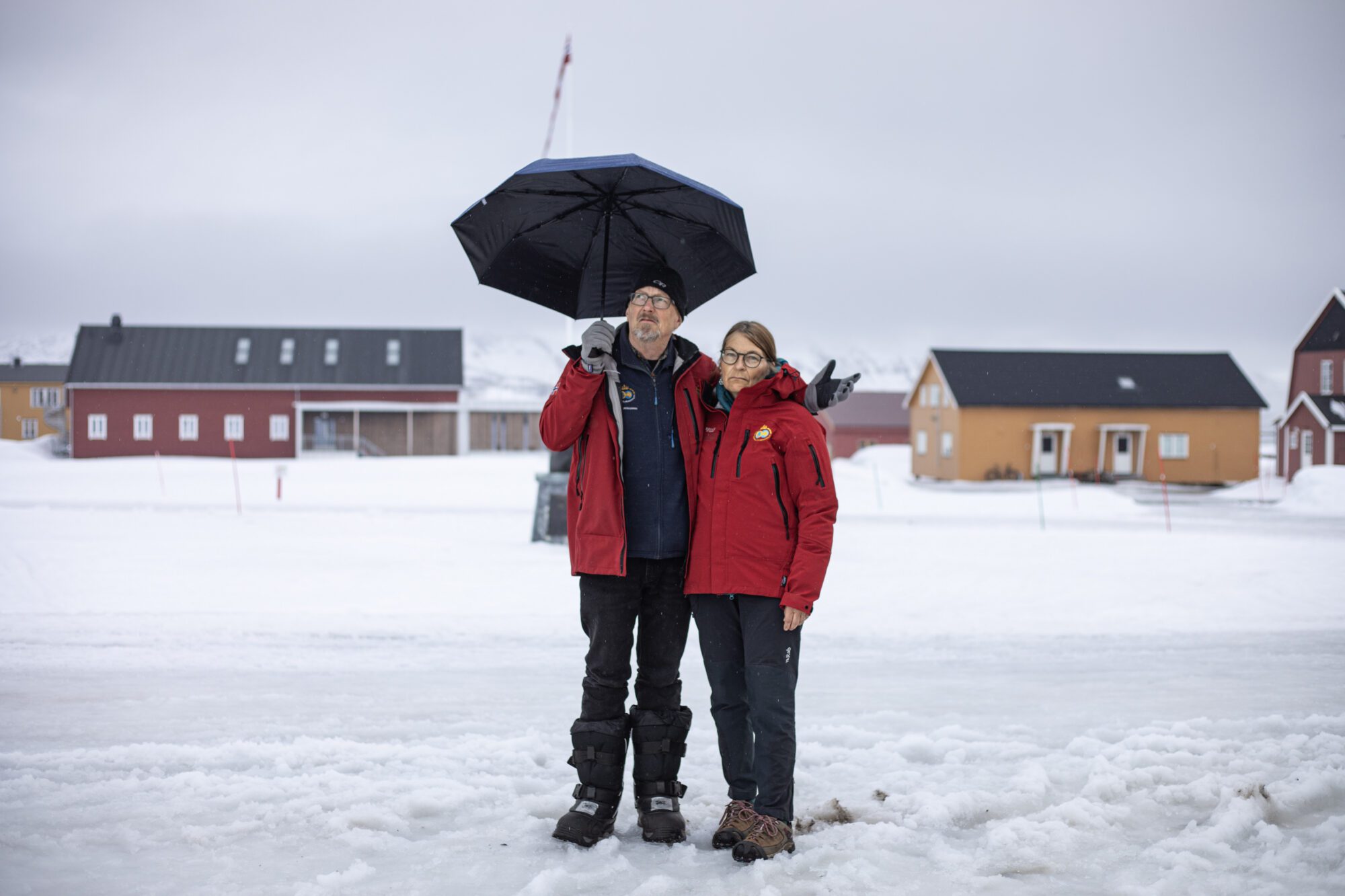
Unusually mild weather with rain and above‑freezing temperatures is creating major challenges for researchers in Ny‑Ålesund on Svalbard this spring. Rapid snowmelt and water‑soaked ground make it difficult—and at times impossible—to carry out planned fieldwork on the glaciers surrounding the research town, located on the northwestern part of the island of Spitsbergen in Svalbard.
“We should be out measuring snow accumulation on the glaciers right now, but we’re essentially weather‑bound. Not because of storms, but because of mild weather, rain, and large amounts of water beneath the snow,” says senior researcher and glaciologist Jack Kohler at the Norwegian Polar Institute.
Fresh images from the field show wet snow, flowing meltwater, and challenging conditions in the area. Both glacier researchers and reindeer researchers are affected.
Long‑term glacier monitoring delayed
The glaciological fieldwork is part of the Norwegian Polar Institute’s long‑term glacier monitoring program on Svalbard. Since early April, one of the institute’s field teams has been measuring snow accumulation, snow depth, and ice movement, digging snow pits, taking ice cores, and checking monitoring equipment on the glaciers. These data provide crucial knowledge about how much snow has accumulated over the winter—an essential basis for calculating the glacier mass balance.
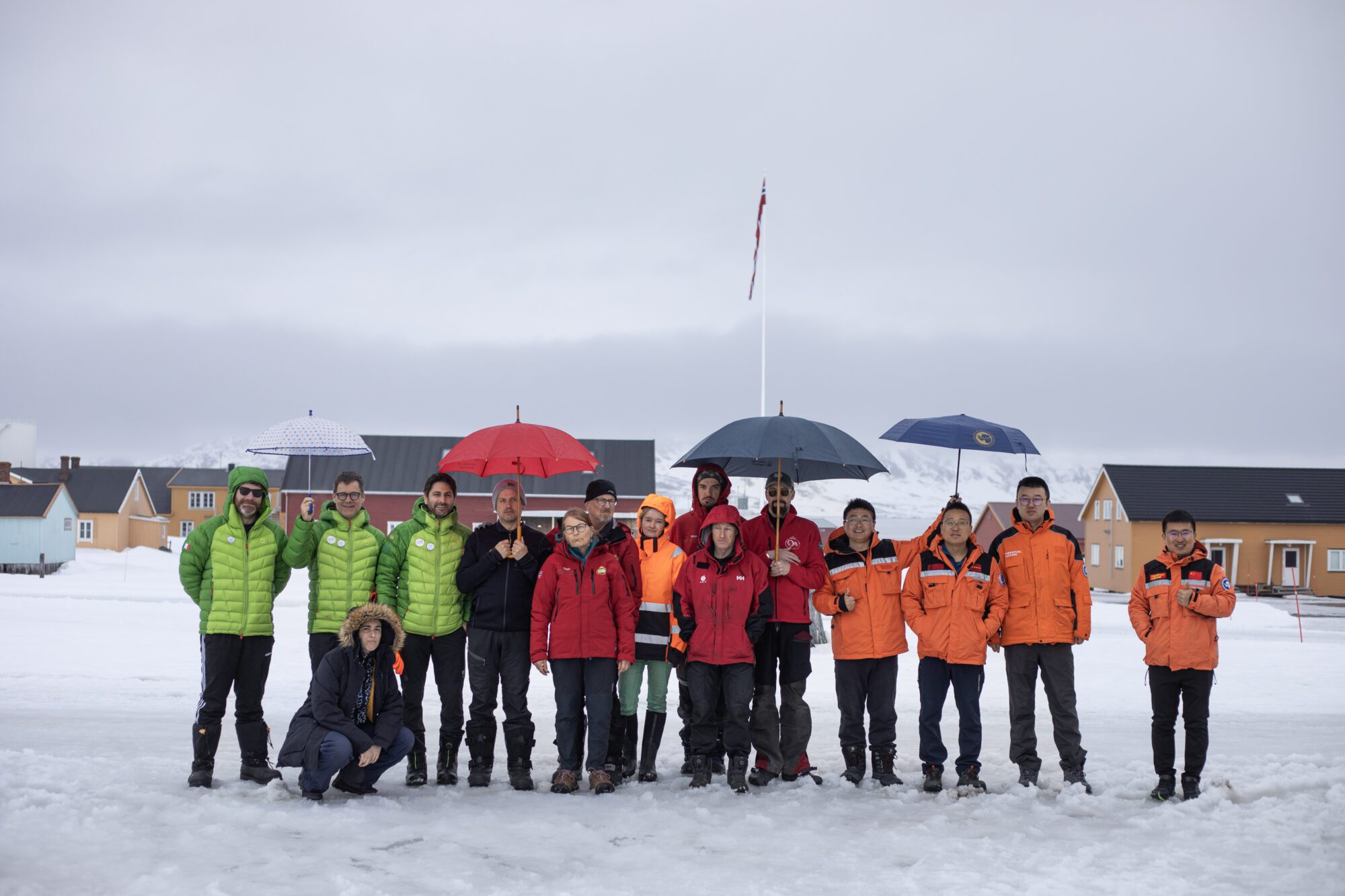
In addition to this, teams from other countries contribute by studying other glaciers and its characteristics surrounding Ny-Ålesund: French glaciologists from the University of Franche-Comté monitor Austre Lovénbreen; Chinese glaciologists study Pedersenbreen; Italian scientists from CNR contribute with their knowledge on snow chemistry. It shows how different countries and institutions bring in their own expertise and specialization, streamlined via the glaciology flagship.
“These are fundamental data for understanding how glaciers respond to climate change. When we are delayed like this, it affects the entire measurement series,” says Kohler.
Milder winters becoming more common
According to Kohler, this spring’s situation is not unique.
“In recent years, we’ve had several periods where we’ve been stuck for up to a week because of rain and above‑freezing temperatures in the middle of winter. And even when the rain stops, we have to wait several days for conditions to freeze again so it’s safe to travel by snowmobile,” he says.
He points out that this is closely linked to global warming.
“Warming in the Arctic is happening far faster than the global average. We see it in the temperatures, in the reduced sea ice, and directly in how our fieldwork is affected,” Kohler says.
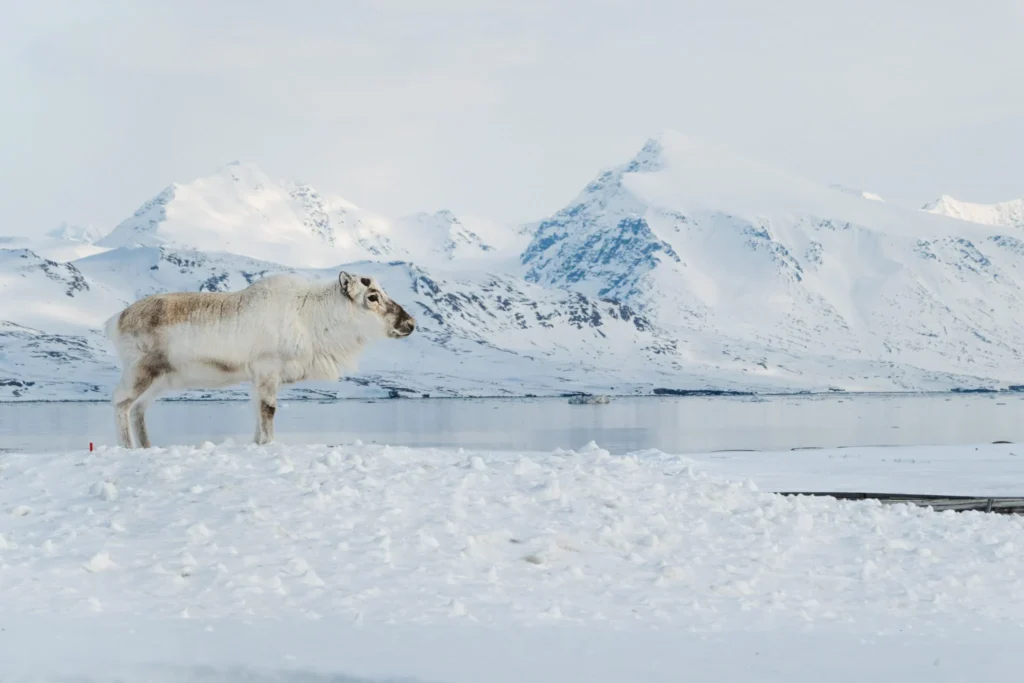
Wet snow, flowing meltwater, and difficult conditions around Ny‑Ålesund affect both glacier researchers and reindeer researchers collecting data for long‑term time series. Photo: Trine Lise Sviggum Helgerud / Norwegian Polar Institute
Fieldwork may have to be halted
The mild weather makes older travel routes to the glaciers unusable and amplifies the usual spring challenges. Increasingly frequent winter rain events lead to water‑soaked snow, open rivers, and unstable conditions early in the year. This makes snowmobile transport from Ny‑Ålesund to the glaciers increasingly difficult.
“If the snow conditions deteriorate further, we may in the worst case have to cancel parts of the fieldwork,” says Kohler
Long time series under pressure
The Norwegian Polar Institute monitors several glaciers around Ny‑Ålesund, including Austre Brøggerbreen and Midtre Lovénbreen. The measurement series here date back to the late 1960s and are among the longest in the Arctic. The institute also monitors the glacier Kongsvegen (since 1987) and the glaciers Kronebreen/Holtedahlfonna (since 2004), in addition to snow cover on Brøggerhalvøya and the amount of soot in the snow.
“Such long time series are absolutely essential for understanding climate change over time,” says glacier researcher Elisabeth Isaksson, who has also participated in this year’s fieldwork.
“For those of us who have worked in Ny‑Ålesund for decades, these changes are dramatic to witness,” she adds.
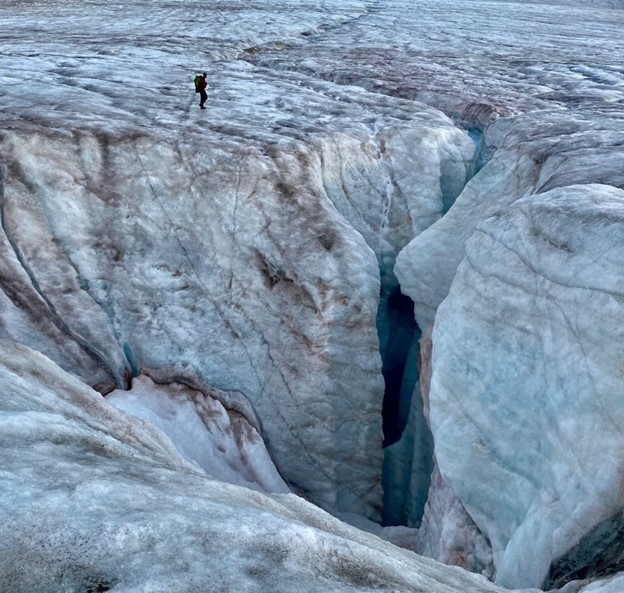
Monitoring glacier mass balance is demanding, costly, and logistically challenging, but essential for understanding future climate change. Photo: Geir Gotaas / Norwegian Polar Institute
Consequences far beyond the Arctic
Monitoring glacier mass balance is labor‑intensive, costly, and logistically challenging, but crucial for understanding future climate change. Climate models show that Svalbard’s glaciers will continue to lose mass at an accelerating pace—four to seven times faster than historical measurements of melt and accumulation have shown.
Meltwater from glaciers contributes directly to global sea‑level rise, with consequences far beyond the Arctic. Today, the so‑called “small glaciers”—all glaciers outside Greenland and Antarctica—account for roughly one‑quarter of observed global sea‑level rise.
“That’s exactly why this type of monitoring is so important. But now we’re seeing that climate change not only affects what we study—it also affects our ability to conduct the research,” says Isaksson.
Read more about the glaciology flagship and its research conducted in Ny-Ålesund here:
Did you find what you were looking for?