Recent publications – terrestrial ecosystems flagship
Within the terrestrial flagships, several recent papers and dataset have been published.
Recent publications & datasets
- De Jong, M. E., Slettenhaar, A. J., Fokkema, R. W., Leh, M., Verhoeven, M. A., Griffin, L. R., … & Scheiber, I. B. (2025). Diel rhythmicity of activity and corticosterone metabolites in Arctic barnacle geese during breeding. Behavioral Ecology, 36(4), araf071. https://doi.org/10.1093/beheco/araf071
- Jensen, T.C., Schartau, A.K., Skjelbred, B., Eiler, A., Loonen, M.J. and Veraart, A.J., 2025. Bird impacts on ecological structure, composition and function in Arctic ponds. Polar Biology, 48(4), pp.1-14. https://doi.org/10.1007/s00300-025-03426-1 [OG1]
- Magnússon, R.Í., Verhoeven, M.A., Lang, S.I., Schuuring, S., van den Dolder, M., Menheere, C. and Limpens, J., 2026. Seasonal timing and preceding moisture regime mediate impacts of heavy rainfall events on High Arctic plant growth. Journal of Ecology, 114(1), p.e70237. https://doi.org/10.1111/1365-2745.70237
- Magnússon, R.I.; Taoran Chen; Manon van den Dolder; Tosca Koeze; Mathieu Decuyper; Simone I. Lang; Juul Limpens, 2025, “Tree-ring growth of S polaris on Svalbard under baseline conditions and artificially enhanced summer rainfall”, https://doi.org/10.17026/LS/3DJ5TN, DANS Data Station Life Sciences, V1.Tree-ring series for Adventdalen, Endalen and Ny-Ålesund:
- Rappazzo, A.C., Giudice, A.L., Rizzo, C., Giannarelli, S., Ghezzi, L., Azzaro, M., Cairns, W.R.L. and Papale, M., 2026. Bacterial community and chemical contamination in high-latitude lake waters: a comparative study from the Svalbard and Antarctic Peninsula regions. Environmental Research, p.123915. https://doi.org/10.1016/j.envres.2026.123915
- Rappazzo, A.C., Lo Giudice, A., Giannarelli, S., Rizzo, C., Tomei, A., Ghezzi, L., Cairns, W.R., AZZARO di Rosamarina, M. and Papale, M., 2026. Diverging contaminant profiles and prokaryotic assemblages in Arctic and Antarctic lake sediments. Frontiers in Microbiology, 16, p.1722478. https://doi.org/10.3389/fmicb.2025.1722478
- Scheiber, I. B., Slettenhaar, A. J., Loonen, M. J., & de Jong, M. E. (2025). Dads on duty: First account of nest sitting in barnacle ganders. Ardea, 113(1), 1-11. https://doi.org/10.5253/arde.2024.a21
Two highlighted papers (3) & (6)
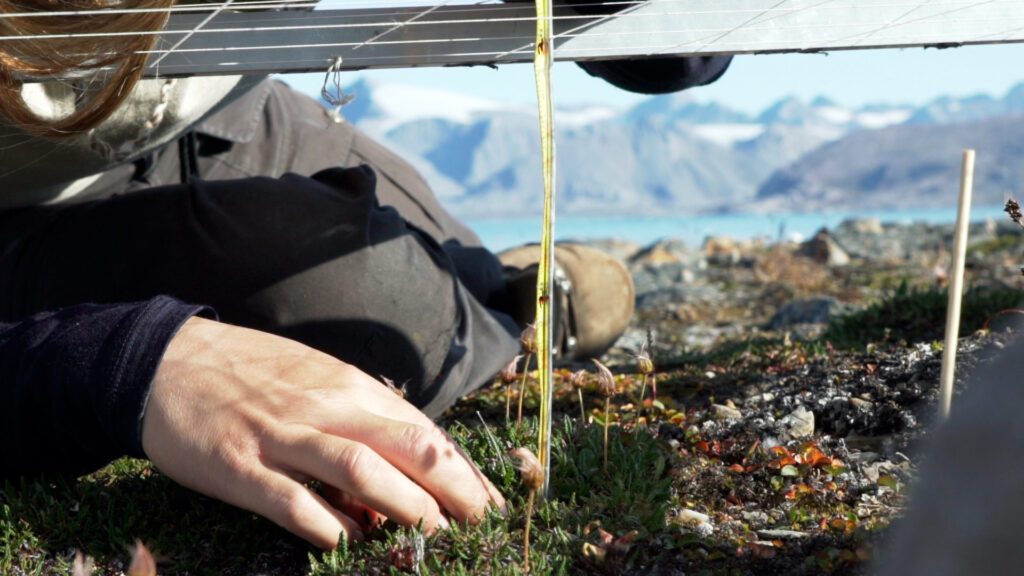
We studied the effect of changes in rainfall regimes in Ny-Alesund and Adventdalen by irrigating patches of tundra. Our findings indicate that the impact of heavy rainfall events on plant growth in the High Arctic is mediated by seasonal timing and local moisture regimes. Late-summer rainfall can extend the growing season for plants experiencing end-of-season water-limitation by delaying onset of senescence. Local soil moisture retention capacity appears to regulate this potential for growing season extension. We found subtle legacy effects of heavy rainfall events plant growth in the next growing season, which suggests that previous years’ hydrological conditions still marginally affect following years’ plant growth.
Photo Credits: Sanne Moedt and Floortje Zonneveld
Contacts: runa.magnusson@wur.nl
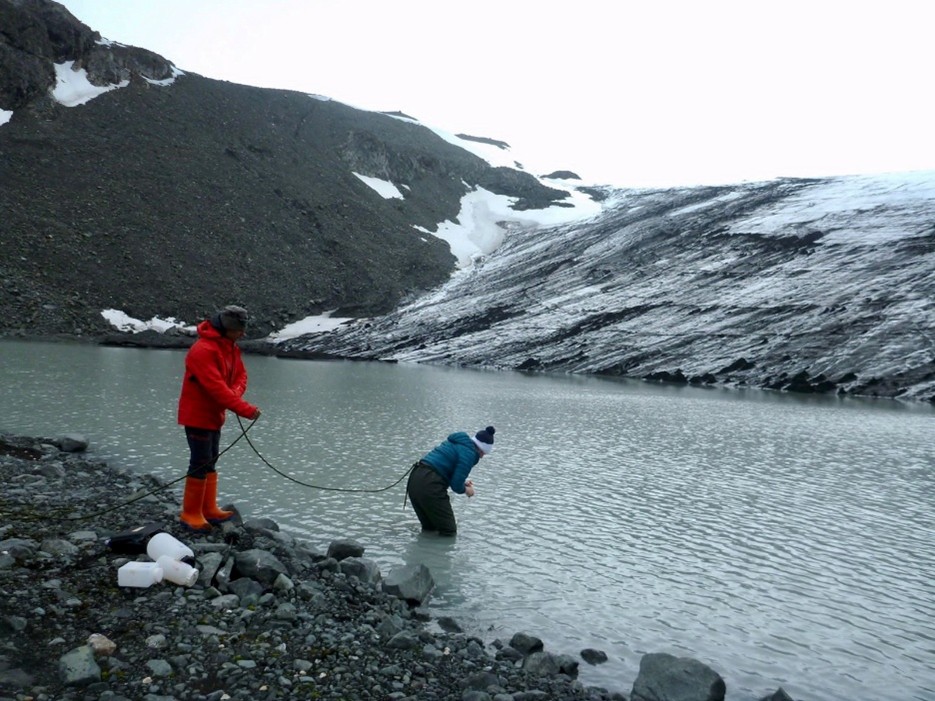
We examine how persistent organic pollutants (POPs) and trace metals shape prokaryotic communities in Arctic (Ny-Ålesund area) and Antarctic lake water (DOI: 10.1016/j.envres.2026.123915) and sediments (DOI: 10.3389/fmicb.2024.1341641). Using 16S rRNA gene sequencing, we linked chemical measurements—including polychlorobiphenyls (PCBs), polycyclic aromatic hydrocarbons (PAHs), polychloronaphthalenes (PCNs), chlorobenzenes (CBs), and trace metals—to prokaryotic community composition. Antarctic sites showed higher PCBs and CBs, while Arctic sites were enriched in PAHs and certain metals, reflecting distinct sources and transport pathways. These contaminant patterns corresponded with region-specific shifts in microbial assemblages, dominated by Proteobacteria and Bacteroidota but differing at finer taxonomic levels. Our findings highlight that contaminant type and intensity influence microbial diversity and ecosystem functioning, providing a comparative baseline for Arctic–Antarctic studies and emphasizing the need for long-term monitoring under climate change.
Funding: Italian Ministry of University and Research (MUR) through the Italian National Antarctic Research Program (grant no. PNRA 18-00194).
Photo Credits: Maria Papale
Contacts: maria.papale@cnr.it; angelina.logiudice@cnr.it
Did you find what you were looking for?