|
|
|
|
|
|
Ny-Ålesund Research Station Newsletter
|
|
|
|
|
The sun rose and set for the last time this year on 24 October, and the dark season has now begun. In October, it felt unusually dark due to the above-zero temperatures, the resulting lack of snow, and the cloudy skies. Rainfall was particularly high: a recent report from the Norwegian Meteorological Institute showed that precipitation was 229% above normal, with a total of 138.2 mm. Fortunately, November brought snow, brightening the polar night.
|
But it is not only the snow that is bringing light to the darkness: Kartverket’s new satellite laser ranging (SLR) system is doing so too. In this newsletter, we highlight some of the major events that have taken place since August, including the publication of the updated strategy for Ny-Ålesund Research Station, the installation of the SLR system at Kartverket, and new publications in Nature involving the Zeppelin Observatory.
|
|
If you wish to receive future newsletters, please remember to sign up.
|
|
|
|
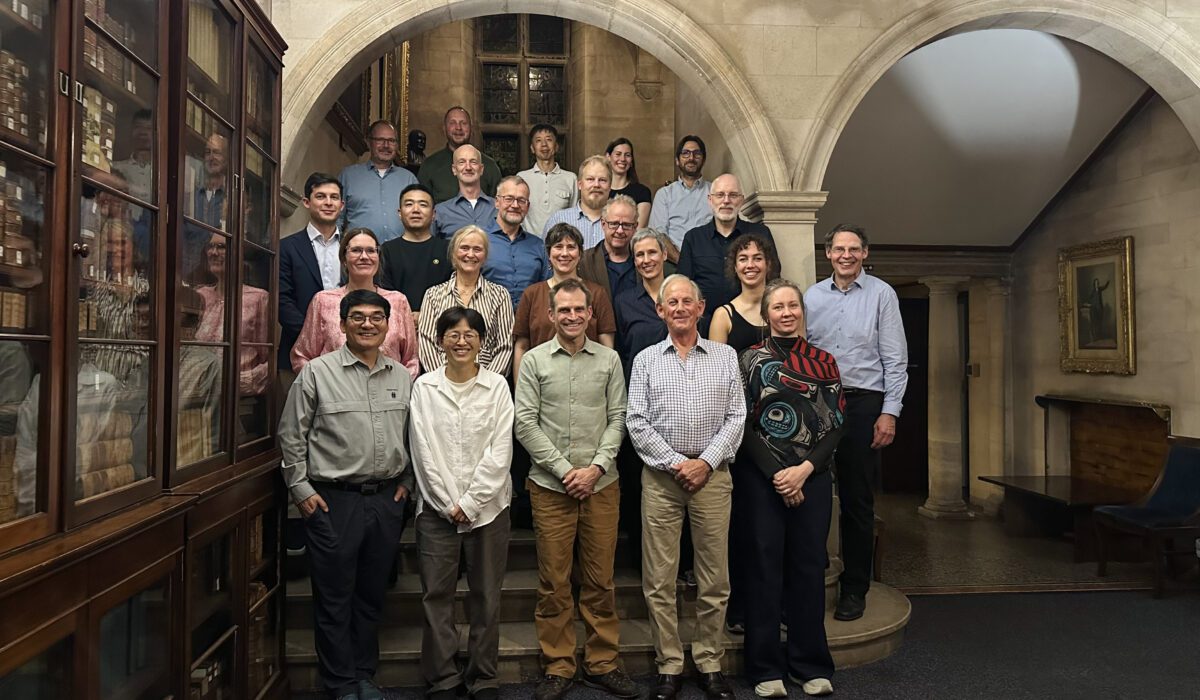
NySMAC members on the fruitful, bi-annual, 65th NySMAC meeting, this autumn hosted by the British Antarctic Survey (BAS) in Cambridge. Thank you for hosting us!
|
|
|
|
|
|
News from Ny-Ålesund Research Station
|
|
|
|
|
Updated strategy on Ny-Ålesund
|
The Strategy for Ny-Ålesund Research Station has been updated by the Norwegian government and was published on the 6th of October. As stated in the press release from the Government, "The updated strategy for the Ny-Ålesund Research Station sets out the prerequisites, framework conditions, and ambitions for research activities, and specifies the requirements that must be fulfilled to obtain access to Ny-Ålesund."
|
|
|
|
|
|
Updated chemical management policy by Kings Bay
|
Kings Bay has published a new Chemical Management Policy for Ny- Ålesund.
|
It is expected that all who intend to use and order chemicals in Ny-Ålesund related to research are familiar with this document.
|
|
|
|
|
|
Satellite Laser Ranging (SLR) installed and opened at Kartverket's geodetic observatory
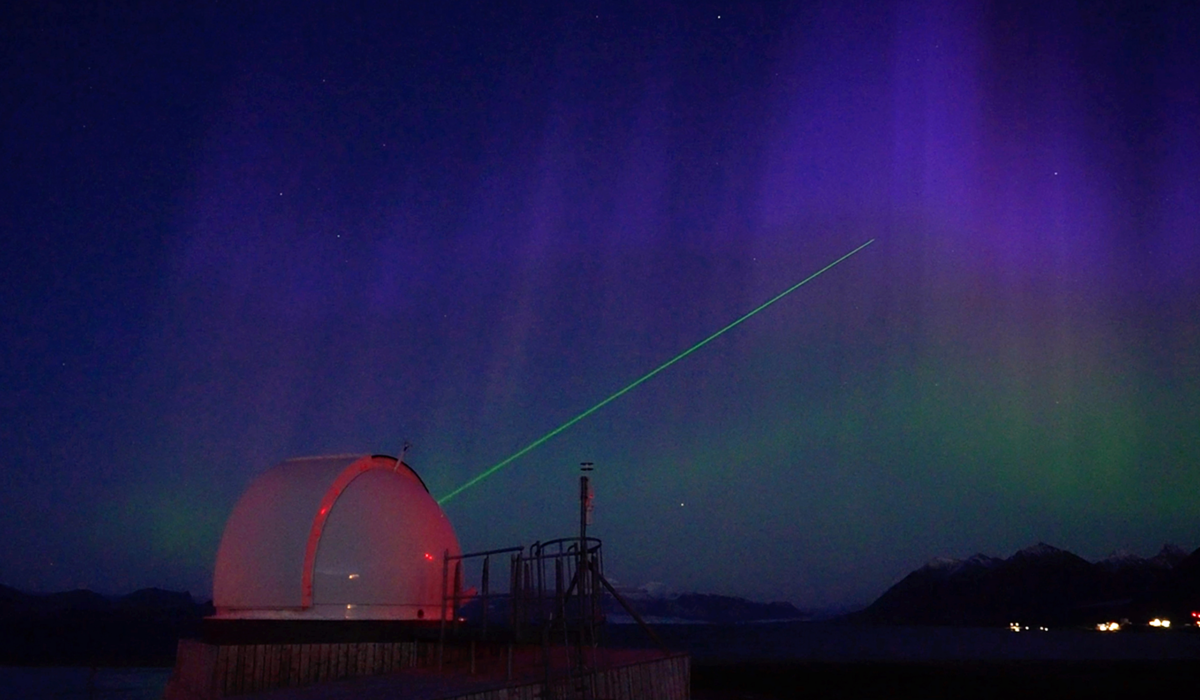
Norway’s Geodetic Earth Observatory by Kartverket is now complete. The last missing piece of the observatory puzzle was the “Satellite Laser Ranging” (SLR) system, which is now up and running. The SLR-system can measure the precise distance to certain satellites, contributing to precise information on Earth’s position and center of mass. The observatory is part of a global network, and it’s data used for precise navigation, satellite measurements and monitoring of the sea-level and glacier melt.
|
|
The SLR was opened and inaugurated with representatives from Norway, the USA, Germany and the UK, including the Norwegian minister of local government and regional development, Bjørnar Selnes Skjæran and NASA director Julie Robinson.
|
|
|
|
The new SLR at Kartverket has been installed. Picture by Bjørn-Owe Holmberg.
|
|
|
|
|
|
New webpage on network contribution in Ny-Ålesund
|
The long-term observations collected in Ny-Ålesund are among the research station’s most valuable scientific assets. Maintained over decades by the international research community, these observations provide unique insights into environmental and climate change in the Arctic. We now created an overview of the networks Ny-Ålesund contributes to.
|
|
|
|
|
|
|
|
|
|
Arctic Field Grant - Apply until the 11.11
|
|
Until the 11th of November of this year, it is possible to apply for the Arctic Field Grant. As stated by the Norwegian Research Council, “The purpose is to support fieldwork in Svalbard for master’s and doctoral students. More experienced researchers are also eligible to apply. Applicants must be employed by or have some other affiliation with a Norwegian research organisation."
|
|
|
|
|
|
Publications
|
|
|
|
Two new Nature publications highlight the importance of the long-term atmospheric observations at Zeppelin observatory in Ny-Ålesund. Both articles were published within two days in September 2026 and both investigate the role of aerosols on the Arctic climate. Congratulations to all involved!
|
|
|
|
|
|
Publication on tracing marine and crustal signatures in glacial meltwaters of Svalbard
|
|
Baneschi I, Franceschi L, Salvadori M, Rielli A, Di Giuseppe P, Spolaor A, Biscaro E, Lee Cairns WR, Lelli M, Menichini M, Raco B, Scoto F, Trifirò S, Doveri M and Pennisi M (2026) Strontium and boron isotope fingerprints reveal marine and crustal controls on chemistry of Arctic meltwaters. Front. Earth Sci. 14:1829934. doi: 10.3389/feart.2026.1829934
|
|
|
Using Sr and B isotopes, we traced marine and crustal controls on meltwater chemistry in glacierized catchments of Kongsfjorden, Svalbard. Our study provides the first application of δ¹¹B to Arctic glacial and proglacial waters, offering new insights into hydrological pathways and weathering processes under Arctic climate change.
|
|
|
|
|
|
|
|
Publication on the drainage of the glacier lake "Setevatnet" and its marine effects
|
|
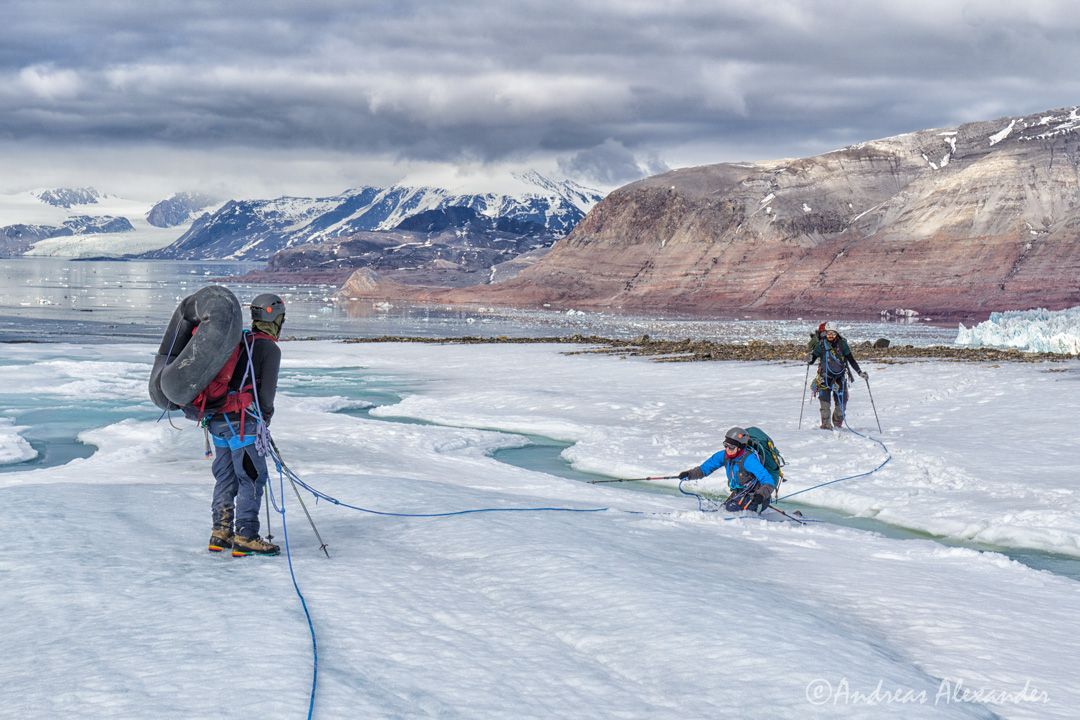
Back in 2021, researchers from the glaciology and Kongsfjorden flagship joined forces to study the draining of the glacier lake "Setevatnet" up at the glacier Kongsvegen.
|
|
|
As the Arctic warms, meltwater accumulates in lakes and around glaciers. Occasionally, these lakes drain in events called Glacier Lake Outburst Floods (GLOFs). In 2021, such an event was tracked from glacier-dammed Lake Setevatnet into Kongsfjorden. Despite high nitrate concentrations in the lake, floodwaters entering the fjord were nitrate-depleted and showed a sharp increase in nitrite. This suggests rapid bacterial nitrate consumption beneath the glacier, potentially reducing nutrient delivery to the ocean while promoting greenhouse gas production.
|
|
|
Alexander, A., Piermattei, L., Assmy, P., Popp, A. L., Zhao, K., Valiente, N., et al. (2026). The impact of subglacial drainage system evolution and glacier lake outburst on Arctic fjord macronutrient dynamics. Journal of Geophysical Research: Biogeosciences, 131, e2023JG007969. https://doi.org/10.1029/2023JG007969
|
|
|
|
Picture by Andreas Alexander.
|
|
|
|
|
|
|
|
Events
|
|
|
Introduction Webinar 2027 for Ny-Ålesund RS
|
|
On the 26th of January 2027 between 8:30 and 10:00 UTC+1, the Norwegian Polar Institute and Kings Bay organize an introductory seminar to Ny-Ålesund Research Station. This seminar is primarily designed for new researchers to familiarize them with Ny-Ålesund, its research facilities, and practical preparations for their stay. Experienced researchers are of course also welcome to join if they wish to refresh their knowledge or stay updated on recent developments.
|
|
|
|
|
|
Polar Night Week 2027 by SIOS
|
25-29 January 2027 in Longyearbyen. The programme and registration will be available soon on the website linked below.
|
|
|
|
|
|
|
|
|
|
|


